III. System Architecture Overview
1 min
MOVA builds a high-performance and highly available payment infrastructure through a layered architecture that covers the full on-chain transaction lifecycle — from request access and consensus validation to event generation, ledger storage, and data synchronization.
3.1 System Logical Structure
The MOVA network consists of key modules, each responsible for specific tasks:
- Management Platform Provides visual management functions including chain administration, block data queries, and node runtime monitoring.
- Smart Contract IDE An integrated online environment for contract development, compilation, and debugging. Supports both EVM and WASM contracts.
- Command Line Tools (CLI) Supports certificate generation, chain configuration, deployment, and fast node setup for local development.
- SDK Toolkit (SDK) Multi-language RPC interfaces enabling contract deployment, invocation, and query.
- Gateway Nodes Act as protocol converters between off-chain services and on-chain protocols. Also collect transactions, pre-execute them, and broadcast batches to consensus nodes.
- Verification Nodes Verify transaction and block signatures, and vote on VerkleTree state sets produced by block execution.
- Consensus Nodes Core accounting role responsible for transaction ordering, event generation, validation, and consensus voting.
- Sync Nodes (Witness Nodes) Synchronize blocks, execute transactions, and store full ledger copies, but do not participate in consensus voting.
- Light Nodes Synchronize state sets from consensus nodes and allow users to verify ledger correctness using only block headers and VerkleTree state sets without storing full blocks or executing transactions.
- Storage Nodes Provide distributed file system capability for on-chain fragmented storage of large files (video, audio, images) for compliant payment proofs, invoices, etc.
- Storage Services Standard APIs to bind file-type data to transactions, enabling synchronized on-chain storage of data and payment behavior.
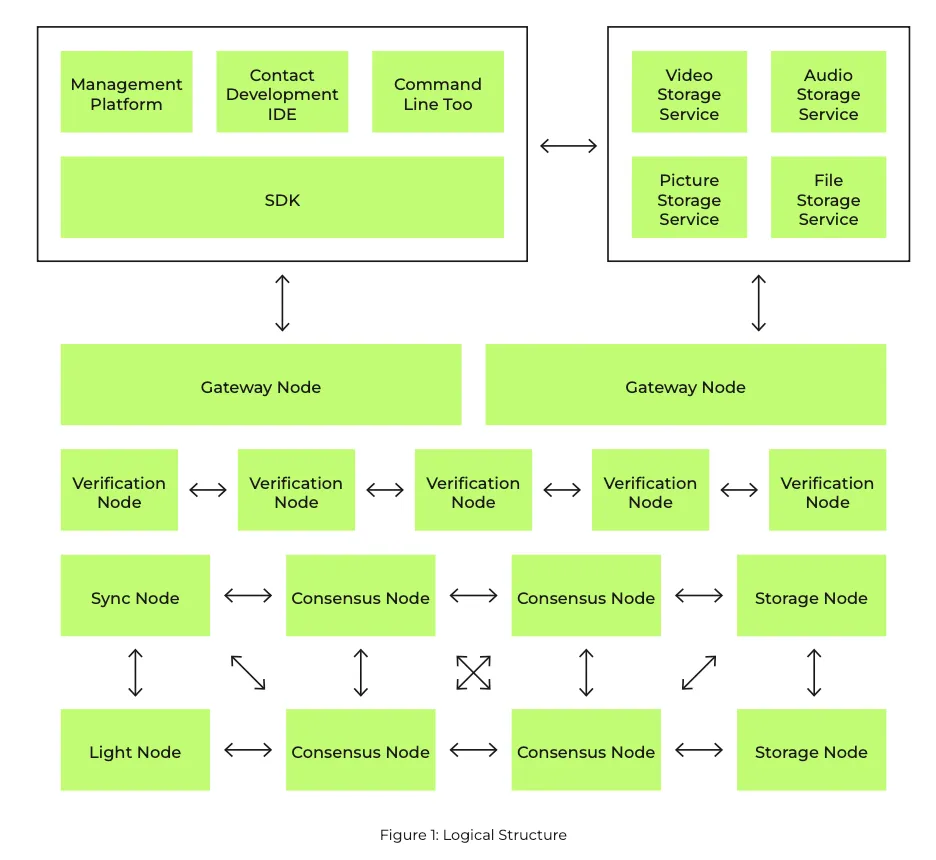
Note: During deployment, the number of consensus nodes must meet consensus algorithm requirements. Sync node count can be adjusted based on persistence and read needs.
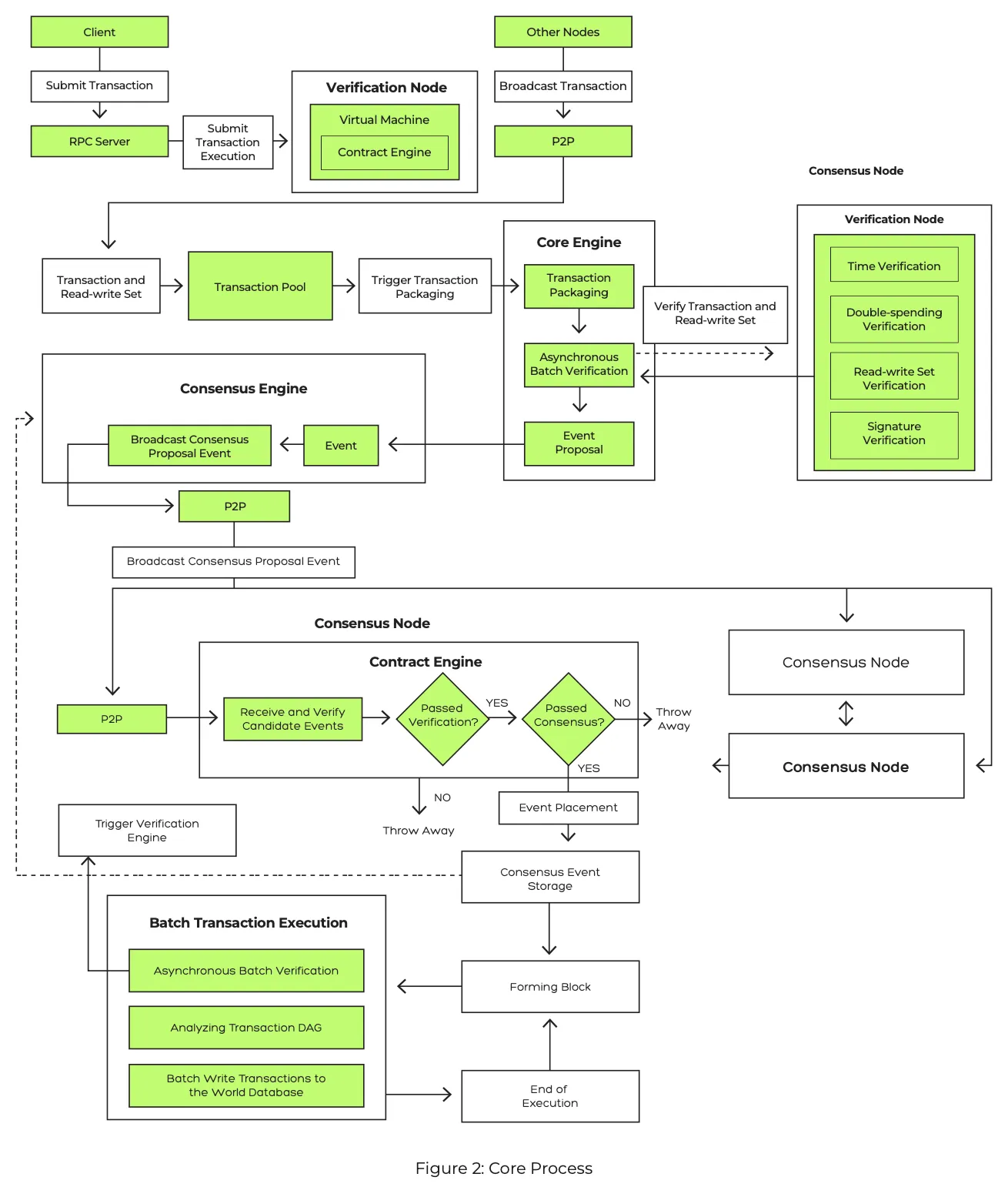
3.2 Core Processing Flow
MOVA’s event-driven model is DAG-based and supports high-concurrency consensus. The core flow is:
- Transaction Reception Transactions come from clients/DApps via RPC or from P2P broadcasts. Verification nodes pre-process and validate signatures.
- Event Proposal Proposal nodes select qualified transactions, simulate them in batches, generate Events, and submit them to consensus.
- Event Broadcast The consensus module uses P2P to broadcast Events to all consensus nodes.
- Event Reception & Consensus Confirmation Nodes run the witness algorithm. If Events in round R+2 strongly see an absolute majority of witness Events in round R+1, the Event is confirmed. Consensus is reached and the Event becomes immutable.
- Block Generation & DAG Update The DAG is asynchronously analyzed. New transaction blocks are generated and verified in parallel, then written into global state DB and historical ledger.